

Maximise the Sheets and Stay Transport Legal
Why does our customer’s presaturated wipe pack contain 114 sheets? Because the right number can deliver better value—and lower transport costs.
When developing a bespoke wipe, sheet size, material and saturation level all matter. But there is another consideration that can have a significant effect on the cost of getting the finished product to the customer: transport requirements.
For one recent project, we brought those requirements into the design process from the start.
The challenge of more wipes within a weight limit
Our customer needed a wipe presaturated with isopropyl alcohol, commonly known as IPA. Because the formulation is flammable, transport compliance was an essential part of the brief.
Our target was to keep each finished pack below 1 kg, including its packaging, while fitting in the maximum number of correctly saturated wipes. This would support shipment under the applicable ADR Limited Quantity (LQ) provisions, subject to the product’s classification and the complete transport packaging meeting the relevant requirements.
A conventional sheet count might have been straightforward. But would it give the customer the best value?
Why 114 sheets
Rather than starting with a familiar count such as 75 or 100, we worked backwards from the finished pack’s weight.
We considered the wipe material, the IPA saturation and the packaging together. For this particular specification, the resulting count was 114 sheets.
That gave the customer 14 more wipes than a 100-sheet pack—a 14% increase in sheet count—while keeping the finished pack below our 1kg design target.
The number may be unusual. The reasoning is practical: use the available weight allowance to deliver more usable product.
The transport advantage
ADR’s Limited Quantity provisions allow eligible dangerous goods to be transported by road under reduced requirements when the relevant quantity, packaging and marking conditions are met.
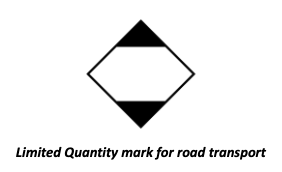
For our customer, designing the product to support this shipping route delivered significant transport savings and avoided the need for UN-approved packaging within the compliant LQ arrangement.
Suitable, robust packaging and the applicable LQ markings are still required. The product also remains classified as dangerous goods: LQ changes the transport requirements that apply, rather than removing the underlying hazard.
Better value starts with the whole product
This project shows why bespoke wipe development should consider more than the wipe itself.
The sheet count, saturation level, pack weight and shipping arrangement all influence the customer’s overall cost. By considering them together, we created a pack that delivered more wipes while supporting a more economical, compliant road transport solution.
Sometimes, the best answer isn’t always a round number. In this case, it was 114.
Looking for a presaturated wipe developed around your application and delivery requirements?